
A long day at a desk can leave your neck tight, your shoulders rounded, and your low back aching before you even get home. Many people assume they simply need to “sit up straight,” but lasting improvement is rarely that simple. This guide to posture correction therapy explains how a personalized, conservative plan can address the strain behind poor posture and help you move with less pain and more confidence.
Posture is not a frozen position you must hold all day. It is your body’s ability to support itself comfortably while you sit, stand, walk, work, exercise, and rest. When muscles, joints, movement habits, old injuries, or foot mechanics are not working well together, your body often compensates. Those compensations can lead to recurring tension, headaches, stiffness, fatigue, and reduced mobility.
What Posture Correction Therapy Is Really Designed to Do
Posture correction therapy is not about forcing your shoulders back or trying to look perfectly aligned in every mirror. It is a clinical approach that identifies the factors contributing to inefficient movement and discomfort, then creates a plan to improve them gradually.
For one person, the main issue may be hours of forward head posture while working on a laptop. For another, it may be an old auto injury, a sports injury, limited hip mobility, or uneven foot mechanics that change the way they stand and walk. The same posture exercise will not solve every problem. Effective care begins with understanding why your body is adapting in the first place.
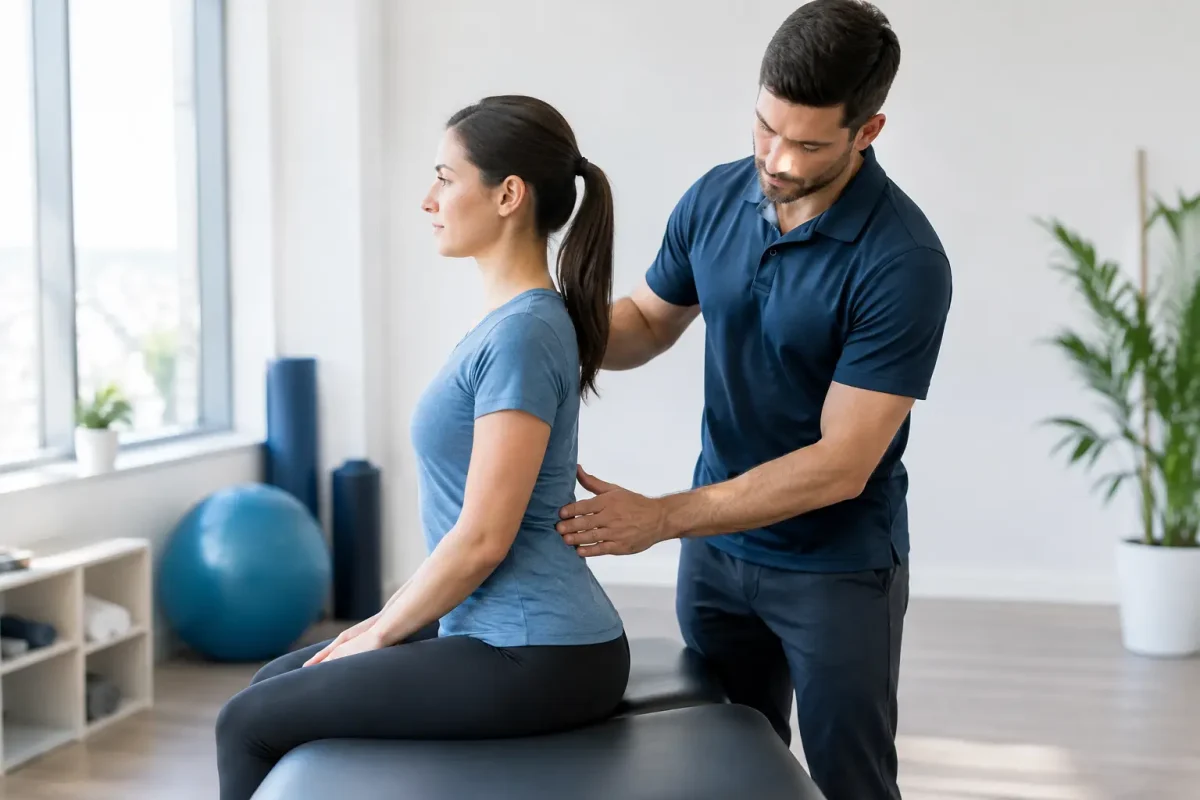
A qualified provider may assess your spinal mobility, muscle tension, range of motion, gait, work setup, balance, and daily activities. They will also consider where you feel pain and whether symptoms travel into an arm or leg. This helps distinguish a simple habit-related strain from a problem that needs more focused care.
Signs Your Posture May Be Causing More Than Stiffness
Posture-related problems do not always look dramatic. Often, they show up as symptoms that build slowly through the day and improve only temporarily with rest. You may notice neck or upper-back tightness after computer work, low-back pain when standing in one place, frequent headaches, shoulder tension, or soreness between the shoulder blades.
Some people also experience discomfort while walking, exercising, or sleeping. If one hip feels tighter than the other, your knees ache after standing, or you repeatedly shift your weight to one side, your mechanics may be contributing. Poor support from the feet can travel upward, affecting the ankles, knees, hips, pelvis, and spine.
Pain is not the only signal. Reduced flexibility, a feeling of heaviness in the shoulders, fatigue during ordinary tasks, or difficulty maintaining a comfortable position can all suggest that your body is working harder than it should.
A Practical Guide to Posture Correction Therapy
Start with a thorough assessment
A useful treatment plan should not begin with generic instructions to stretch more. Your provider should listen to how symptoms started, what makes them worse, what has helped, and what you need to return to doing. That may mean working comfortably, training for a sport, caring for family, or recovering after a collision.
The physical exam may include posture observation, joint motion testing, muscle assessment, and gait analysis. If your pain began after an accident or is accompanied by numbness, weakness, severe headaches, or other concerning symptoms, the provider may recommend further medical evaluation before beginning treatment.
Improve mobility before demanding perfect posture
A stiff upper back, restricted neck, tight hip flexors, or limited ankle movement can make “good posture” feel exhausting. Trying to force an upright position without restoring motion often leads to more tension.
Gentle chiropractic care can help improve spinal and joint mobility when appropriate. Massage therapy may help reduce muscular guarding and tenderness, while acupuncture or laser therapy may be considered as part of a broader plan for pain relief and tissue recovery. The right combination depends on your condition, health history, and response to care.
The goal is not to rely on passive treatment forever. Hands-on therapies can create a more comfortable starting point so you can move, strengthen, and retrain habits more effectively.
Build strength where your body needs support
Weakness is not always obvious. You can be active and still have poor endurance in the muscles that stabilize your neck, shoulder blades, core, hips, or feet. A personalized exercise program can improve control in these areas without aggravating symptoms.
Your plan may include simple movements for deep neck support, upper-back strength, core stability, hip control, or glute activation. The exercises should fit your current ability. If an exercise causes sharp pain, worsening tingling, or lingering flare-ups, it needs to be adjusted rather than pushed through.
Consistency matters more than intensity. A few well-chosen exercises performed regularly can be more valuable than an occasional hard workout that leaves you too sore to continue.
Address your workstation and daily movement habits
No treatment plan can fully overcome eight hours of daily strain from a poor work setup. Small changes can make a meaningful difference: position your screen closer to eye level, keep frequently used items within easy reach, support your lower back if needed, and avoid holding a phone between your ear and shoulder.
Still, ergonomics are only part of the picture. Even a well-designed chair becomes uncomfortable if you stay in it too long. Brief movement breaks throughout the day give joints and muscles a chance to reset. Stand up, walk for a minute, gently move your shoulders and neck, or change positions before stiffness becomes pain.
Consider the role of your feet and footwear
Your feet are the foundation for standing and walking. If they roll inward excessively, have poor arch support, or distribute pressure unevenly, your body may compensate all the way up the chain. That does not mean every posture concern requires orthotics, but it is worth assessing when symptoms involve the feet, knees, hips, or low back.
Custom orthotics can be useful for patients whose gait and foot mechanics contribute to recurring strain. They should be prescribed based on an individual evaluation, not chosen from a shelf as a one-size-fits-all solution. Proper footwear and gradual adaptation are also important.
What Results Should You Expect?
Posture correction is usually a process, not a single appointment. Some patients feel relief early as pain and muscle tension decrease. More lasting changes in strength, mobility, and movement habits take time because your body has practiced its compensations for months or years.
Progress should be measurable in ways that matter to you. You may be able to work through the afternoon with fewer headaches, turn your head more comfortably while driving, return to the gym without a flare-up, or stand and walk longer with less pain. A good provider will reassess your response and modify the plan when needed.
There are trade-offs. A more intensive treatment schedule may help during an acute flare-up, while a gradual exercise-based plan may be better for long-term prevention. The best pace depends on your symptoms, goals, schedule, and how your body responds.
When You Should Not Wait
Postural discomfort is common, but certain symptoms need prompt medical attention. Seek urgent care for sudden weakness, loss of bowel or bladder control, numbness in the groin area, unexplained fever, major trauma, chest pain, or severe pain that rapidly worsens. New or persistent numbness, tingling, or radiating pain should also be evaluated rather than treated as ordinary stiffness.
For less urgent but recurring pain, early assessment can prevent a manageable issue from becoming a frustrating cycle. At Robichaud Chiropractic & Orthotics, care is built around listening carefully, identifying contributing factors, and recommending conservative options that support real-world recovery.
You do not need to chase a rigid, picture-perfect posture. The more meaningful goal is a body that can sit, stand, walk, work, and enjoy the activities you value with less strain. If pain or stiffness is getting in the way, a personalized assessment can give you a clear place to start.